Márton Kivovics currently works at the Department of Public Dental Health, Semmelweis University, Budapest, Hungary, as associate professor and head of the Dental Surgery Unit. He does research in Implantology, Dental Surgery, and Dentistry. His current projects focus on using biomaterials for oral rehabilitation, Computer-Assisted Surgery, and the application of Artificial Intelligence in oral pathology and dento-maxillofacial radiology.
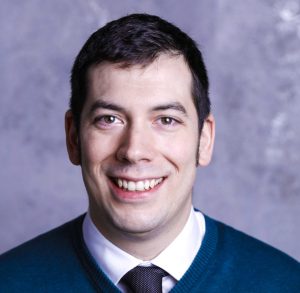
Prof. Márton Kivovics
Hungary
Bio
Abstract
Implant-supported overdentures in the management of the elderly patient
Implant-supported overdentures (ISODs) provide completely edentulous patients with several advantages over traditional dentures and implant-borne fixed dental prostheses (FDPs). ISODs offer better retention than conventional dentures, allowing for reduced palatal extension. They are also a more cost-effective treatment option and allow for better oral hygiene compared to FDPs. The buccal flange of the overdenture provides effective lip support, enhancing facial aesthetics in cases of advanced alveolar atrophy. Moreover, ISODs provide freedom for the optimal set-up of front teeth. A disadvantage of ISODs is the increased risk of biomechanical complications compared to FDPs. However, these complications rarely jeopardize prosthetic success, as most can be managed chairside. Virtual planning of ISODs combined with fully guided static Computer-Assisted Implant Surgery facilitates the optimal positioning of dental implants and reduces surgical complications and postoperative morbidity. Therefore, this approach may be particularly beneficial for the treatment of elderly patients.
In this lecture, we present our short-term results delivering overdentures supported by a bar mesostructure on four dental implants placed through fully guided sCAIS. Clinical and radiological outcomes indicate a low rate of biological and biomechanical complications, supporting the advantages of this treatment for the elderly.