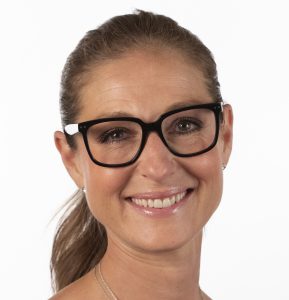
Short Bio Nicole Winitsky
”Dr. Nicole Winitsky is a prosthodontist working in private practice in Stockholm, Sweden and as an affiliated researcher at the University of Zurich, Switzerland. She achieved her DDS in 1997 and her PhD in 2023 at the Karolinska Institute. She was Board Certified as a specialist in Prosthodontics in 2012.
Her clinical focus is full ceramic anterior prosthetics. Her research “Single Implants in the anterior maxilla” has been rewarded with “the Gold prize for best prosthodontic research” by the Swedish Prosthodontic association and twice with “the EAO Prize for clinical research in Implant Dentistry” by the European association for Osseointegration (EAO). She works on a regular basis with lecturing and giving courses nationally and internationally about her topic of research “Single anterior implants” and the topics team-work within the dental team, multidisciplinary team-work, esthetics, full ceramic prosthodontics, implantology and treatment planning. She also works with assisting colleagues in treatment planning of clinical cases. She is founder and host of the dental podcast “Blodad tand”. She is on the advisory board of the female network, Professionals in Dentistry Esthetic Group (PiD EG), a board member of the Communication committee in the European association of Osseointegration (EAO) and a fellow of the Foundation of Oral Rehabilitation (FOR).