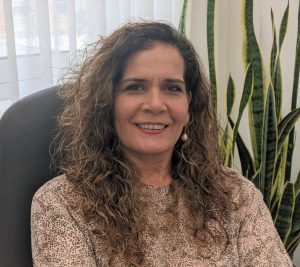
Prof. Yael Houri-Haddad

Israel

Bio

Prof. Yael Houri-Haddad is a full Professor and Head of the department of Prosthodontic in the Hebrew University-Hadassah Faculty of Dental Medicine, Jerusalem. Prof. Houri-Haddad holds DMD and PhD degrees from the Hebrew University-Hadassah School of Dental Medicine, where she also completed an internship in prosthodontics. During 2009-2010 she spent two years in Boston MA USA; in 2009 spent a sabbatical year in Dr. Thomas Van Dyke Laboratory of Periodontology at Boston University and in 2010 was a visiting researcher in Forsyth institute.

Higher Education: 1994 D.M.D. degree Hebrew University-Hadassah Faculty of Dental Medicine; 2002 Ph.D. thesis in Oral Biology “Molecular mechanisms in the pathogenesis of periodontal disease”, Hebrew University; 2002 Graduate Diploma in Prosthodontics, Hadassah Medical  Center; 2015 Leadership Strategies for Evolving Health Care Executives at the  Harvard School of Public Health, Boston, MA; 2017-2018 Course in Management of departments in hospitals and community clinics, Israeli medical association.  Research topics: pathogenesis of periodontal disease, Genetic susceptibility of periodontal disease, common genetic factors associated with both periodontitis and cardiovascular diseases, oral microbiome and its association to systemic diseases such as diabetes and cardiovascular disease, Periimplantitis, developing a mice model and studying the genetic background of the disease,  effect of blue light on the inflammatory process, multispecies biofilm models, Biocompatibility tests for dental materials- In vitro and in vivo models,  Novel diagnostic tool for early detection of oral diseases using volatile compounds and electronic nose, Studying caries development and modalities for prevention and treatment using in-vitro and in-vivo mice models and recently studying the impact of titanium implant on the brain health, a project that is granted by the MAVRIE- ISF.

Research Appointments:  2009-2010 Sabbatical, research in BOSTON University, Dr Thomas Van Dyke Laboratory of Periodontology, 2010-2011 Visiting researcher in Forsyth institute, Boston, Dr Thomas Van Dyke Laboratory of Periodontology 2011-2017 Israeli Councilor, International Association for Dental Research (IADR) 2011-2012 Treasurer IADR Israeli division 2012-2013 Secretary, IADR Israeli division, 2013-2014 Elected President, IADR Israeli division 2014-2015 President, IADR Israeli division, 2015-2016 Past President, IADR Israeli division, Academic Appointments at the Hebrew University-Hadassah Faculty of Dental Medicine: Since 2017 Head, Department of Prosthodontics, Since 2021 Full Professor, Since 2021 Vice Dean for Educational Affairs; Awards: 2011 Scott fellowship award to a study presented by undergraduate student, 2013 Colgate award-IADR to a study presented by undergraduate student, 2015 Senta Foulkes Research Prize, 2019 Hebrew University Rector Award for Excellence in teaching;  Students supervised: 21 DMD students, 26 MSc students, 7 PhD students to date; Grants: 20 grants awarded to date, totaling over $2M in funds from different sources; publications:  About 90 peer reviewed articles published in scientific journals


Abstract

Losing Teeth or Losing Your Mind? The Emerging Link Between Dental Implants, Inflammation, and Cognitive Decline.

Oral inflammatory diseases, particularly periodontitis and peri-implantitis, are persistent sources of chronic systemic inflammation that may contribute to cognitive vulnerability. In peri-implantitis, chronic inflammation accelerates the local corrosion and surface degradation of titanium (Ti) implants, potentially elevating patient exposure to Ti-derived micro- and nanoparticles within the oral cavity. We hypothesize that these degraded particles can enter systemic circulation, cross the blood-brain barrier, and negatively impact neurological health. This study investigates the correlation between dental implants, peri-implant inflammation, and cognitive decline.

Methods & Results

This research utilizes a translational approach combining human clinical data and an animal model:

  • Clinical Findings: In our ongoing clinical research evaluating patients over the age of 65, individuals presenting with periodontitis or peri-implantitis exhibited significantly poorer cognitive performance. Notably, this cognitive decline positively correlated with a higher number of placed implants and a longer duration of implant exposure.
  • Animal Model Findings: To explore the underlying mechanism, a murine model was utilized where mice underwent tooth extraction followed by titanium implant placement. The Ti-implanted mice demonstrated impaired cognitive function across a comprehensive battery of behavioral tests. Furthermore, histological and toxicological analyses revealed the presence of titanium fragments, alongside marked neuroinflammation, specifically within the hippocampus and broader brain tissues.

Conclusion

These findings suggest a potential, novel link between dental implants, chronic peri-implant inflammation, and compromised brain health. As implant dentistry remains a standard of care, this ongoing research highlights the critical need for clinicians to monitor long-term peri-implant health. Ultimately, understanding these pathways aims to enhance patient care and drive the development of safer, next-generation implant materials and strategies.